
From Good Governance to Digital Heritage Infrastructure: How Rwanda Is Building the Memory Systems of the Future

Rwanda has spent the last two decades proving something many nations still struggle to operationalize: good governance is not an abstract principle—it is the practical ability to deliver meaningful outcomes for people.
Governance becomes visible when institutions work, when services become accessible, and when citizens experience efficiency, accountability, and dignity in everyday life.
Rwanda’s transformation has not happened through policy alone. It has also emerged through culture, systems thinking, and an intentional commitment to service delivery.
Many Rwandans remember the service-awareness campaigns that shaped institutional behavior across sectors. The Rwanda Development Board’s Na Yombi became a recognizable call for service excellence within the private sector. At the same time, the Rwanda Governance Board advanced Nkuwikorera, reinforcing a national ethos of accountability, ownership, and citizen-centered leadership. Platforms such as Irembo further accelerated this shift by making government services more efficient and accessible through digital infrastructure.
These were not isolated initiatives.
They planted seeds.
Seeds that gradually transformed service delivery into a cultural norm.

For me personally, these ideas deeply influenced The Hospitality, a reality TV initiative we hosted to explore how service excellence could be translated into public storytelling and social consciousness. Even then, the underlying question remained the same:
What happens when service becomes culture?
Today, that question has evolved.
We are no longer speaking only about service delivery in hospitality, commerce, or public administration.
We are now asking whether the same governance discipline can be applied to something equally vital yet often overlooked:
Cultural memory.
Heritage as Infrastructure
For too long, heritage has been treated as static memory—something preserved in museums, archives, libraries, or oral traditions but disconnected from economic and technological systems.
This framing is increasingly outdated.
In the digital age, heritage is becoming infrastructure.
It powers education.
It shapes identity.
It strengthens tourism.
It informs research.
It fuels creative industries.
It enables intergenerational knowledge transfer.
This is why the work of Rwanda Cultural Heritage Academy (RCHA) matters so profoundly.
Established by Presidential Order No. 082/01 of 28 August 2020, RCHA carries a strategic mandate to:
- Safeguard the Kinyarwanda language
- Preserve and promote Rwandan culture and values
- Protect national heritage
- Preserve national archives
- Promote reading culture
Its institutional structure reflects a systems approach to memory governance—covering language preservation, heritage site management, museum collections, archival services, and library systems.
This matters because culture cannot be sustained by sentiment alone.
It requires institutions.
It requires systems.
It requires infrastructure.
Rwanda’s Digital Heritage Leap
Rwanda is now entering a new chapter.
One of the most exciting developments has emerged through collaboration between Global Digital Heritage (GDH) and RCHA.
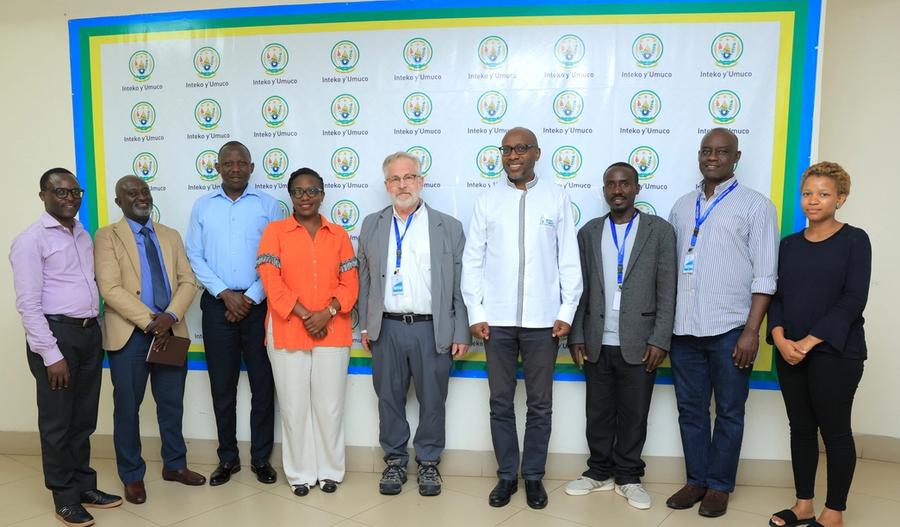
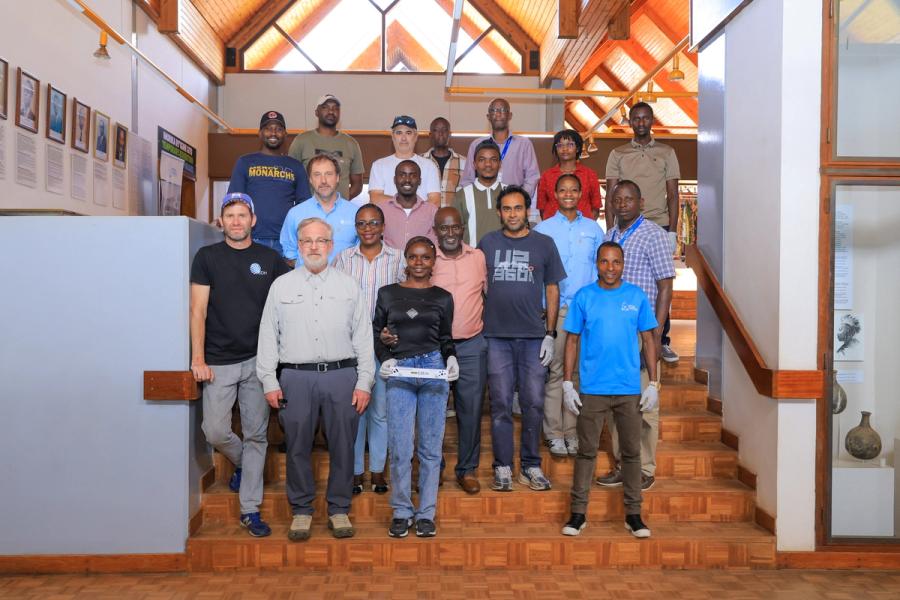
After reconnecting with GDH leadership and welcoming Dr. Herbert Maschner to Rwanda, it became increasingly clear that Rwanda is positioning itself on the global digital heritage map.
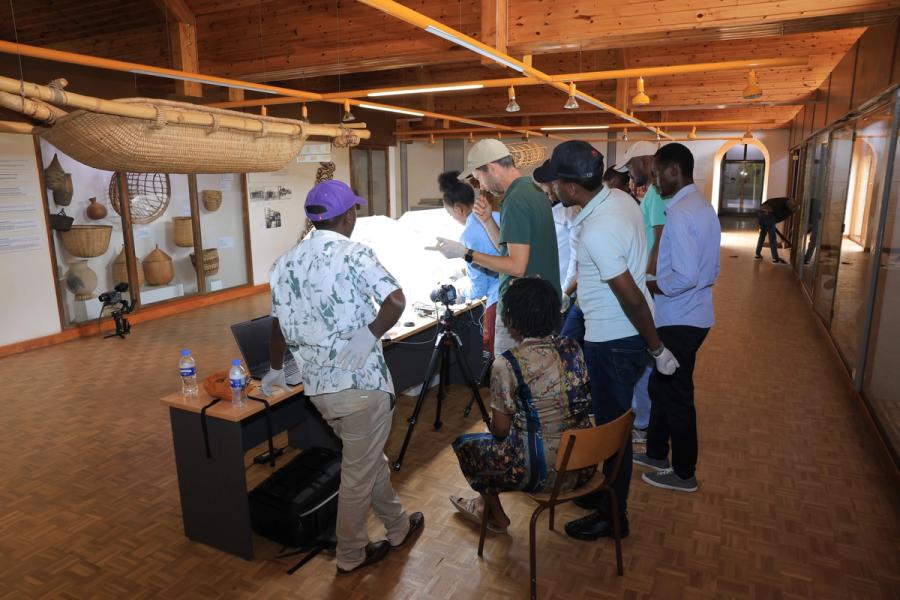
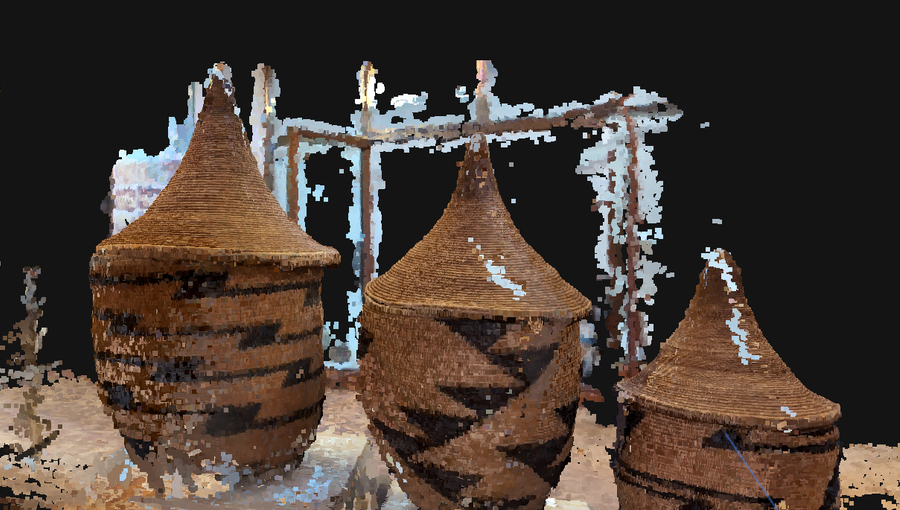
Recent photogrammetry workshops and training programs are already translating vision into measurable outcomes.
Soon, Rwanda will witness the launch of:
- Nearly 300 high-resolution 3D heritage models
- Virtual tours of 2 caves
- Virtual tours of 2 museums
These outputs represent far more than technical deliverables.
They mark the emergence of immersive heritage access.
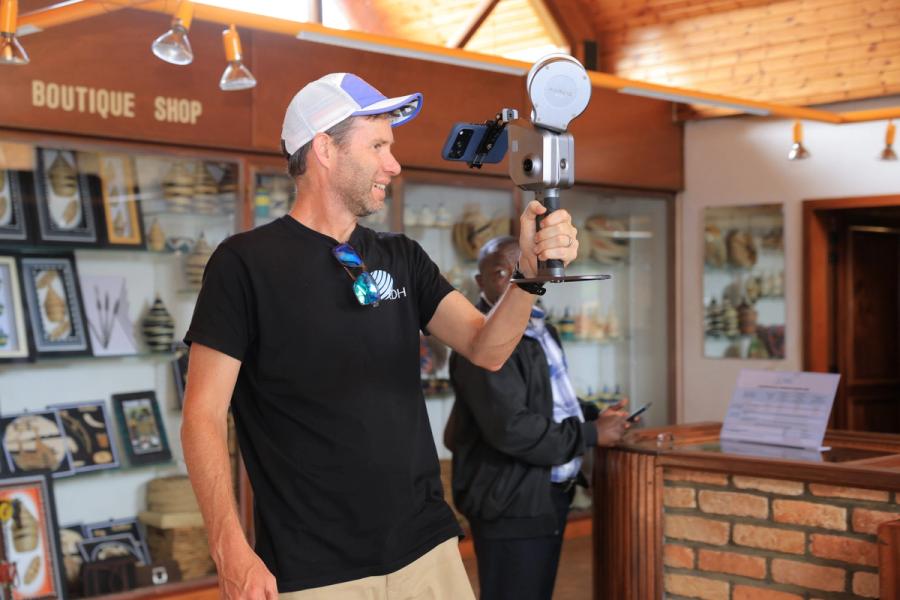
Through technologies such as photogrammetry, 3D reconstruction, spatial computing, and digital twin systems, heritage can now be documented, preserved, studied, and experienced in entirely new ways.
A student in Kigali can explore heritage digitally.
A researcher abroad can access cultural datasets remotely.
A member of the diaspora can reconnect with ancestral memory from anywhere in the world.
This changes everything.
Beyond Digitization: Toward Living Archives
At IRAGE Corps, we believe the future is bigger than digitization alone.
Scanning artifacts is not enough.
Uploading files is not transformation.
True digital heritage requires what we call Living Archives.
A living archive is dynamic.
It is accessible.
It grows through community participation.
It evolves with technology.
It creates new forms of engagement.
This means digital heritage should not only preserve the past—it should actively generate future value.
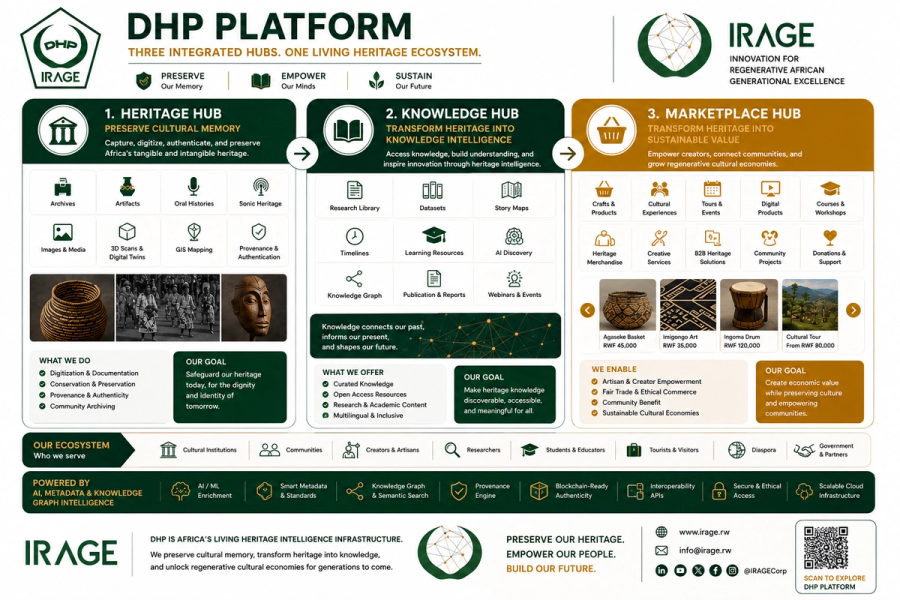
At IRAGE, this vision informs our broader mission through the Digital Heritage Preservationists (DHP) Platform, where digital repositories, cultural marketplaces, immersive learning, and AI-enabled heritage intelligence converge.
We are interested not only in storage but also in ecosystems.
Not only in archives but also in activation.
Not only in preservation but also in regeneration.
Designing Africa’s Memory Infrastructure
As August approaches and certification milestones draw near, one thing is becoming increasingly clear:
We are not witnessing the conclusion of a project.
We are witnessing the beginning of a new infrastructure era.
Digital heritage is becoming a strategic layer of national development.
Africa now has a historic opportunity to design its own memory systems—on its own terms.
The challenge ahead is therefore not simply technological.
It is philosophical.
Who owns memory?
Who curates narrative?
Who governs access?
Who benefits economically?
How do communities remain central?
These are the defining questions of the next generation.
The future belongs to institutions, technologists, researchers, cultural custodians, and entrepreneurs willing to build collaborative ecosystems around these questions.
The invitation is open.
Let us co-create heritage systems that are inclusive, ethical, interoperable, and regenerative.
Because this is not merely about preserving the past.
It is about designing the memory infrastructure of the future.
And for Rwanda—and Africa—this is only the beginning.
About IRAGE Corps
IRAGE Corps is a regenerative innovation enterprise building Africa’s digital heritage ecosystem at the intersection of culture, technology, media, and creative enterprise.
Through its flagship Digital Heritage Preservationists (DHP) Platform, IRAGE develops digital infrastructure for African heritage through AI, GIS, photogrammetry, immersive technologies, digital repositories, cultural marketplaces, and digital archiving systems—transforming cultural memory into living intelligence that powers preservation, education, research, tourism, and sustainable development.
Explore more: irage.rw | tech.irage.rw